 Australia
 Singapore
 Philippines
 India
India5.41 MIN READ
Application Modernisation: A Practical Guide for your B2B Organisation
 Ben Opit | Feb 06, 2026
App Modernisation is becoming a critical strategy for Australian B2B organisations aiming to stay competitive and efficient. As businesses increasingly rely on technology to drive innovation, using legacy applications can affect progress. They often result in high maintenance costs, security vulnerabilities, and slow response times.
This blog explores Application Modernisation, its importance for businesses, and the strategies organisations can adopt to update legacy systems, ensuring they align with modern business needs, improve performance, and enhance security. Whether you are looking to upgrade outdated systems, scale your infrastructure, or ensure compliance with evolving regulations, app Modernisation is essential.
Why Application Modernisation Matters for Organisations
Many Australian organisations are in the process of modernising their IT infrastructure to embrace cloud technology, optimise performance, and ensure business agility. This highlights the growing trend towards adopting modern solutions that reduce costs, improve security, and enhance operational efficiency.
For B2B companies, Application Modernisation goes beyond just upgrading technology; it’s about creating a flexible, scalable foundation for long-term success. With the rise of cloud services and the need for businesses to stay agile, over 70% of Australian IT decision-makers now recognise that modernising legacy systems is essential for business growth.
What Is Application Modernisation?
App Modernisation is a structured process that improves existing applications using modern platforms, architectures, and tools. It focuses on updating applications without losing core business logic or data.
Application Modernisation can include:
- Updating application architecture.
- Improving performance and scalability.
- Enhancing security and compliance.
- Reducing operational cost.
A Modernisation-led approach ensures applications remain reliable, maintainable, and aligned with business goals.
Why App Modernisation Matters for B2B
Many organisations still run critical systems on outdated platforms. These systems increase cost, slow delivery, and create security risk.
Application Modernisation matters because it:
- Reduces reliance on legacy infrastructure.
- Improves system availability and performance.
- Supports cloud and hybrid operating models.
- Aligns applications with Australian compliance requirements.
For B2B organisations, app Modernisation enables growth without rebuilding systems from scratch.
Key Drivers for Application Modernisation
Australian enterprises modernise applications to address clear business and technical needs.
Key drivers include:
- Rising infrastructure and maintenance costs.
- Security risks from unsupported platforms.
- Slow-release cycles and limited scalability.
- Integration challenges with modern tools and APIs.
- Increased compliance and audit requirements.
Application Modernisation resolves these issues in a controlled and phased way.
App Modernisation Approaches
Different applications require different Modernisation strategies.
Rehost
Applications move to a new platform with minimal change. This approach delivers quick infrastructure benefits.
Replatform
Teams make targeted changes to improve performance and scalability while keeping core logic unchanged.
Refactor
Applications are redesigned using modern architectures such as microservices or APIs.
Replace
Legacy applications are retired and replaced with modern software where redevelopment is not viable.
Each approach balances cost, effort, and long-term value.
App Modernisation Lifecycle
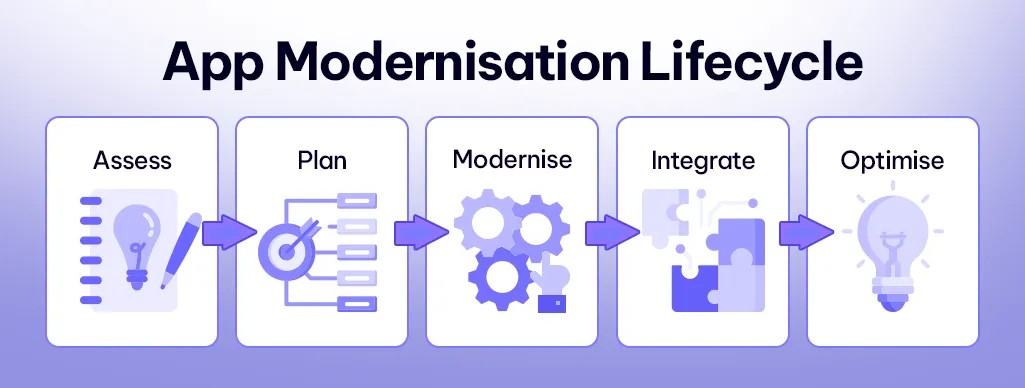
App Modernisation follows a clear lifecycle to reduce risk and disruption.
Assess
Teams review applications, dependencies, performance, and risk. They identify Modernisation priorities.
Plan
Stakeholders define scope, timelines, and success measures. They select the right Modernisation approach.
Modernise
Teams implement changes in phases. They test performance, security, and integrations.
Integrate
Modernised applications connect with cloud platforms, data services, and identity systems.
Optimise
Teams monitor usage, cost, and performance. Continuous improvement follows delivery.
This lifecycle keeps Modernisation aligned with business delivery goals.
Security, Compliance, and Data Considerations
B2B organisations must embed security and compliance into Application Modernisation from the start.
Key focus areas include:
- Secure identity and access management.
- Data protection and encryption.
- Alignment with ISO 27001 and ASD Essential Eight.
- Audit logging and monitoring.
A structured app Modernisation program reduces risk while improving compliance posture.
Application Modernisation Checklist
Use this checklist to assess readiness before starting an Application Modernisation program:
- Business objectives defined.
- Application inventory completed.
- Dependency and integration mapping done.
- Security and compliance requirements reviewed.
- Modernisation approach selected per application.
- Testing and rollback plans defined.
- Support and operating model agreed.
This checklist improves delivery speed and reduces unexpected issues.
Common Challenges and How Modernisation Helps
Legacy Platform Constraints
Older platforms limit scalability and integration. Application Modernisation removes these constraints.
High Operating Costs
Outdated systems require expensive support. Modern platforms reduce maintenance effort.
Security Exposure
Unsupported software increases risk. Modernisation applies current security controls.
Slow Change Cycles
Legacy applications slow down delivery. Modern architectures support faster updates.
How to Measure App Modernisation Success
Track Modernisation outcomes using clear metrics:
- Reduction in application operating cost.
- Improved response time and availability.
- Faster release and deployment cycles.
- Reduced security incidents.
- Improved user satisfaction.
Application Modernisation links these metrics to business performance.
Why Choose Exigo Tech for App Modernisation
Exigo Tech delivers app Modernisation services for Australian B2B organisations. The focus stays on practical delivery, compliance alignment, and measurable outcomes.
Exigo Tech supports:
- Legacy application assessment.
- Cloud and hybrid-ready architectures.
- Secure application redesign.
- Ongoing optimisation and support.
The approach remains business-focused and execution-driven.
Next Steps
Application Modernisation works best with a clear plan and phased delivery. Start by reviewing your current applications and defining business priorities.
If this guide helped your planning, share it with your team or contact Exigo Tech to discuss your application Modernisation roadmap.


 Exigo Tech - Ask AI (Beta)