 Australia
 Singapore
 Philippines
 India
India7.13 MIN READ
Endpoint Security for SMBs: Protecting Devices, Users and Business Data
 Niten Devalia | Sep 28, 2026
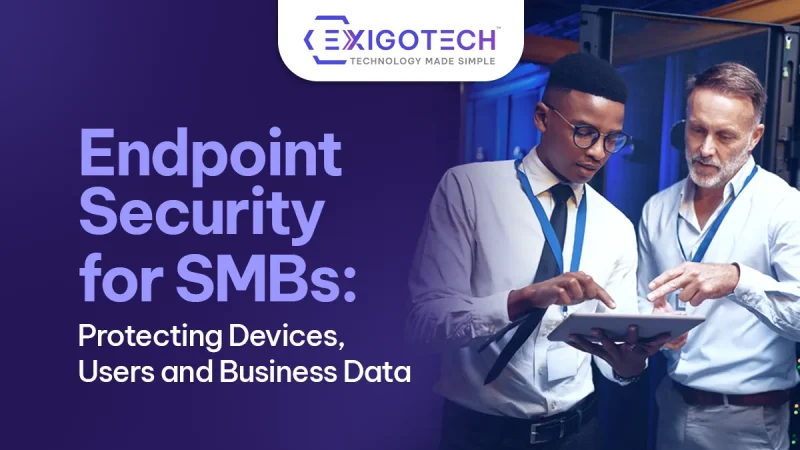
For small and medium-sized businesses, every laptop, desktop, mobile device and workstation is a potential entry point for a cyberattack.
Employees increasingly work across offices, homes and shared environments, while business applications and data are spread across cloud and on-premises systems. This makes endpoint security a critical part of an organisation’s overall cybersecurity strategy.
A single compromised device can give attackers access to credentials, business applications, customer information or sensitive files. Yet many SMBs still rely on basic antivirus software and reactive IT support to protect their endpoints.
Modern endpoint security takes a broader approach. It combines prevention, detection, monitoring and response to protect devices throughout their lifecycle.
At Exigo Tech, we help SMBs strengthen endpoint protection as their Managed Intelligence Partner, combining security technology, expert monitoring and proactive management to reduce risk without adding unnecessary complexity.
What Is Endpoint Security?
Endpoint security protects the devices employees use to access business systems and information.
These endpoints can include:
- Laptops and desktops
- Mobile devices
- Servers
- Remote workstations
- Virtual machines
- Corporate tablets
Modern endpoint security goes beyond traditional antivirus. It can include malware prevention, behavioural detection, vulnerability management, device controls, threat monitoring and automated response.
Why SMBs Are Targeted
Cybercriminals often target SMBs because smaller organisations may have fewer dedicated security resources while still holding valuable data.
Attackers may attempt to compromise endpoints through:
- Phishing emails
- Malicious attachments
- Stolen credentials
- Drive-by downloads
- Vulnerable applications
- Malicious websites
- Remote access tools
Once an endpoint is compromised, attackers may attempt to move laterally across the environment or access cloud applications.
This makes endpoint security an important layer in a broader defence strategy.
Antivirus Alone Is No Longer Enough
Traditional antivirus remains useful, but modern threats increasingly require more sophisticated detection capabilities.
Attackers can use legitimate tools, stolen credentials and previously unknown techniques to bypass basic signature-based protection.
Modern endpoint protection can analyse:
- User behaviour
- Processes
- Applications
- Files
- Network activity
- Device activity
This helps security teams identify suspicious behaviour rather than relying only on known malware signatures.
The Essential Elements of Endpoint Security
Endpoint Protection
Every business device should have appropriate security controls that prevent malware, ransomware and other malicious activity.
Solutions such as Microsoft Defender for Endpoint can provide advanced protection across supported Windows and other endpoint environments.
Patch and Vulnerability Management
Unpatched operating systems and applications can provide attackers with opportunities to compromise devices.
Businesses should establish processes to:
- Identify missing patches
- Prioritise vulnerabilities
- Deploy updates
- Monitor compliance
- Address unsupported software
Automated patch management can reduce the burden on internal IT teams.
Identity Protection
A secure endpoint is not enough if an attacker can use stolen credentials to access business applications.
Endpoint security should therefore work alongside identity controls such as:
- Multi-Factor Authentication (MFA)
- Conditional Access
- Microsoft Entra ID
- Privileged access controls
Protecting the device and the identity using it provides multiple layers of defence.
Endpoint Detection and Response
Endpoint Detection and Response (EDR) provides greater visibility into suspicious activity.
Security teams can investigate events such as:
- Unusual processes
- Suspicious logins
- Malware execution
- Credential attacks
- Abnormal application behaviour
When threats are identified, response actions can help isolate affected devices and limit further damage.
Device Management
Security also depends on knowing which devices are accessing company resources.
Centralised device management helps organisations maintain:
- Device inventories
- Security policies
- Configuration standards
- Application controls
- Compliance policies
For businesses using Microsoft 365, Microsoft Intune can help manage and secure corporate devices alongside Microsoft security technologies.
Endpoint Security and Remote Work
Hybrid work has made endpoint protection even more important.
Employees may connect from:
- Home networks
- Customer sites
- Public locations
- Branch offices
- Shared workspaces
This means businesses cannot assume that devices are always operating within a trusted corporate network.
Endpoint security provides protection directly on the device, helping maintain consistent security controls regardless of where employees work.
Protecting Endpoints from Ransomware
Ransomware remains a major concern for SMBs.
An infected endpoint can potentially become the starting point for a broader attack involving file encryption, credential theft and lateral movement.
A layered endpoint strategy should combine:
- Malware protection
- EDR
- Identity security
- Application controls
- Patch management
- Backup and recovery
- Security monitoring
No individual technology eliminates ransomware risk, but layered controls can reduce the likelihood and impact of an attack.
Endpoint Security Should Be Managed Continuously
Deploying endpoint security software is only the beginning.
Security teams need to monitor alerts, investigate suspicious activity, maintain policies and respond when threats emerge.
For SMBs without dedicated security teams, managing this continuously can be difficult.
A managed security approach provides access to specialist expertise and ongoing monitoring without requiring the organisation to build a large internal security operation.
Common Endpoint Security Mistakes
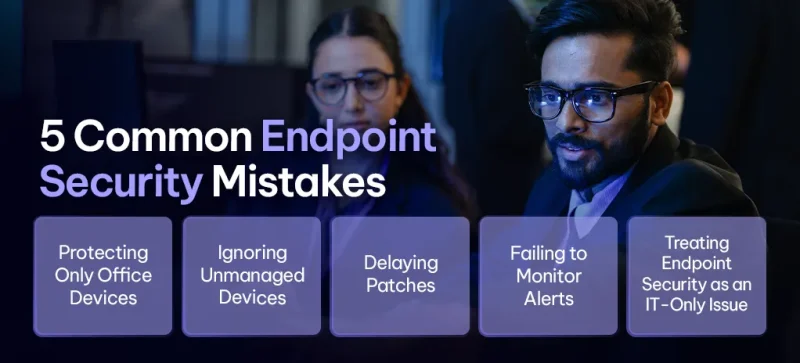
Protecting Only Office Devices
Remote and mobile devices can create additional security exposure and should be included in the organisation’s security strategy.
Ignoring Unmanaged Devices
Unknown or unmanaged endpoints can introduce significant risk if they access business applications or data.
Delaying Patches
Known vulnerabilities can remain exploitable when organisations lack consistent patch management processes.
Failing to Monitor Alerts
Security tools are ineffective if alerts are ignored or not investigated.
Treating Endpoint Security as an IT-Only Issue
Users play an important role in endpoint security. Security awareness and appropriate policies should complement technical controls.
Why Choose Exigo Tech as Your Managed Intelligence Partner
At Exigo Tech, we help SMBs build practical endpoint security strategies that protect devices while keeping security manageable.
As your Managed Intelligence Partner, our services can include:
- Endpoint Security Assessments
- Microsoft Defender for Endpoint
- Microsoft Intune
- Endpoint Detection and Response
- Patch and Vulnerability Management
- Identity and Access Management
- Managed Detection and Response
- Security Monitoring
- Cybersecurity Advisory and Governance
We bring security technologies, managed services and specialist expertise together to help businesses strengthen protection without adding unnecessary operational complexity.
 Exigo Tech - Ask AI (Beta)