 Australia
 Singapore
 Philippines
 India
India6.49 MIN READ
Microsoft Fabric vs Power BI: Choosing the Right Data Analytics Architecture for Australian Businesses
 Alpesh Prajapati | Jun 19, 2026
Data has become one of the most valuable assets within modern organisations.
Businesses generate information from multiple sources every day: ERP systems, CRM platforms, financial applications, cloud services, customer interactions, operational systems, and increasingly, AI-powered tools.
The challenge is no longer collecting data.
The challenge is turning that data into meaningful insights that support better decision-making.
For many Australian businesses, Microsoft Power BI has been the go-to platform for business intelligence and reporting. However, with the introduction of Microsoft Fabric, organisations are now evaluating whether Power BI alone is enough or whether a broader data platform is needed.
Understanding the difference between Microsoft Fabric and Power BI is essential when planning a modern data strategy.
At Exigo Tech, we help organisations build scalable and intelligent data environments as their Managed Intelligence Partner, ensuring analytics investments align with both current needs and future growth.
Why Data Architecture Matters More Than Ever
Many organisations still struggle with fragmented data environments.
Information often sits across multiple systems, including:
- ERP platforms
- CRM applications
- Financial systems
- Cloud applications
- Operational databases
- Excel spreadsheets
- Third-party platforms
As businesses grow, these disconnected data sources create challenges:
- Inconsistent reporting
- Data duplication
- Limited visibility
- Manual reporting effort
- Delayed decision-making
A modern data architecture helps organisations create a single source of truth while improving visibility, governance, and scalability.
This is where both Power BI and Microsoft Fabric play important roles.
What Is Power BI?
Power BI is Microsoft’s business intelligence and data visualisation platform.
It enables organisations to connect to multiple data sources, transform data, and create interactive dashboards and reports.
Power BI is designed to help users:
- Visualise business performance
- Monitor KPIs
- Analyse trends
- Share insights across teams
- Support data-driven decision-making
For many organisations, Power BI has become a critical reporting and analytics tool.
Key Benefits of Power BI
-
Interactive Dashboards
Power BI enables users to build visual dashboards that provide real-time business insights.
-
Self-Service Analytics
Business users can explore data without relying heavily on IT teams.
-
Broad Data Connectivity
Power BI connects to hundreds of data sources, including Microsoft and third-party platforms.
-
Strong Microsoft Integration
Power BI works seamlessly with Microsoft 365, Dynamics 365, Azure, and other Microsoft technologies.
-
Rapid Reporting Deployment
Organisations can develop reporting capabilities relatively quickly without large-scale infrastructure investments.
For many businesses, Power BI remains an excellent solution for reporting and business intelligence.
However, reporting is only one part of the modern data landscape.
What Is Microsoft Fabric?
Microsoft Fabric is Microsoft’s unified data and analytics platform.
Rather than focusing solely on reporting, Fabric brings together multiple data services into a single environment.
It combines capabilities traditionally spread across separate platforms, including:
- Data integration
- Data engineering
- Data warehousing
- Data science
- Real-time analytics
- Business intelligence
Power BI is actually included within Microsoft Fabric as one of its core components.
This is an important distinction.
Fabric does not replace Power BI.
Instead, it extends Power BI by providing a broader end-to-end data architecture.
The Core Difference Between Fabric and Power BI
The easiest way to understand the difference is this:
Power BI Answers Questions
Power BI focuses on analysing and visualising data.
It helps users understand:
- What happened?
- What is happening now?
- What trends exist?
- How is the business performing?
Microsoft Fabric Manages the Entire Data Journey
Fabric focuses on how data is:
- Collected
- Integrated
- Stored
- Governed
- Processed
- Analysed
- Shared
Power BI sits at the reporting layer.
Fabric supports the entire analytics ecosystem.
When Power BI May Be Enough
Not every organisation requires a full data platform.
Power BI may be the right solution when:
-
Reporting Is the Primary Requirement
Businesses mainly need dashboards and operational reporting.
-
Data Volumes Are Manageable
Data can be handled efficiently without complex architectures.
-
Existing Data Platforms Already Exist
Organisations may already have established databases and data warehouses.
-
Analytics Maturity Is Still Developing
Businesses beginning their analytics journey often start successfully with Power BI.
For these organisations, Power BI can deliver significant value without introducing unnecessary complexity.
When Microsoft Fabric Becomes Valuable
Fabric becomes increasingly relevant as organisations expand their data strategy.
-
Multiple Data Sources Need Consolidation
Fabric helps unify data from various platforms into a single environment.
-
Data Volumes Continue Growing
Larger datasets require scalable architectures.
-
Governance and Compliance Requirements Increase
Fabric provides stronger data governance capabilities across the analytics lifecycle.
-
Advanced Analytics Is a Priority
Organisations exploring AI, machine learning, and predictive analytics benefit from Fabric’s broader capabilities.
-
Real-Time Insights Are Required
Businesses requiring near real-time data processing can leverage Fabric’s integrated architecture.
The Role of AI in Modern Data Platforms
One reason Microsoft Fabric is attracting attention is its alignment with Microsoft’s broader AI strategy.
As organisations deploy:
- Microsoft Copilot
- AI assistants
- Machine learning models
- Intelligent automation solutions
The importance of structured, governed data becomes even greater.
AI is only as effective as the data it can access.
Fabric helps create a more consistent and scalable data foundation for future AI initiatives.
For many organisations, this makes Fabric not just a data platform decision, but part of a broader digital transformation strategy.
Common Challenges Organisations Face
Many businesses evaluating Fabric versus Power BI encounter similar challenges.
-
Unclear Data Strategy
Technology decisions are often made before business requirements are fully understood.
-
Data Silos
Different departments manage information independently.
-
Reporting Inconsistencies
Teams may generate conflicting reports from different data sources.
-
Governance Gaps
Data ownership, access controls, and quality standards may be poorly defined.
-
Scalability Concerns
Existing reporting solutions may struggle as data complexity increases.
A structured assessment helps organisations determine the most appropriate architecture for their current and future needs.
Benefits of the Right Analytics Architecture
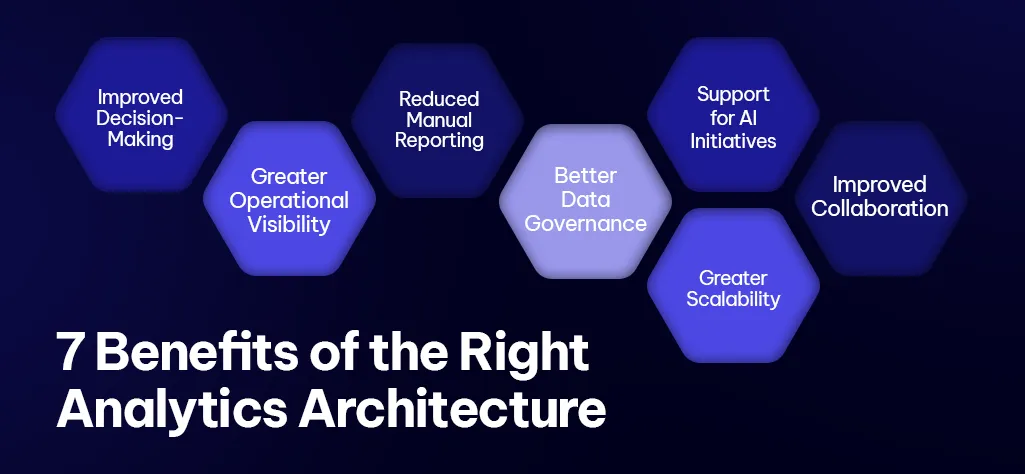
Whether an organisation chooses Power BI, Microsoft Fabric, or a combination of both, the right architecture delivers significant business value.
-
Improved Decision-Making
Access to trusted and timely information supports better outcomes.
-
Greater Operational Visibility
Leaders gain clearer insight into business performance.
-
Reduced Manual Reporting
Automation reduces effort and improves consistency.
-
Better Data Governance
Organisations gain stronger control over information assets.
-
Support for AI Initiatives
Well-structured data environments improve AI readiness.
-
Greater Scalability
Data platforms can evolve alongside business growth.
-
Improved Collaboration
Teams work from a consistent source of information.
Why Choose Exigo Tech as Your Managed Intelligence Partner
At Exigo Tech, we help organisations turn data into a strategic asset.
As your Managed Intelligence Partner, we:
- Assess analytics maturity and business requirements
- Design modern data architectures
- Implement Power BI and Microsoft Fabric solutions
- Establish governance and security frameworks
- Support AI and data transformation initiatives
- Optimise reporting and analytics environments
Our focus is on helping organisations build data platforms that deliver measurable business outcomes.
Power BI or Fabric? The Answer Depends on Your Data Strategy
Microsoft Fabric and Power BI are not competing technologies.
- Power BI remains one of the world’s leading business intelligence platforms.
- Microsoft Fabric extends those capabilities into a broader, unified data ecosystem.
For some organisations, Power BI may be exactly what they need today.
For others, Fabric may provide the foundation required for advanced analytics, AI, and future growth.
The key is understanding where your business is today, and where you want your data strategy to take you tomorrow.


 Exigo Tech - Ask AI (Beta)