 Australia
 Singapore
 Philippines
 India
India5.51 MIN READ
Cybersecurity Guide to Safeguarding Against 2026’s Rising Scam Threats
 Niten Devalia | Jun 09, 2025
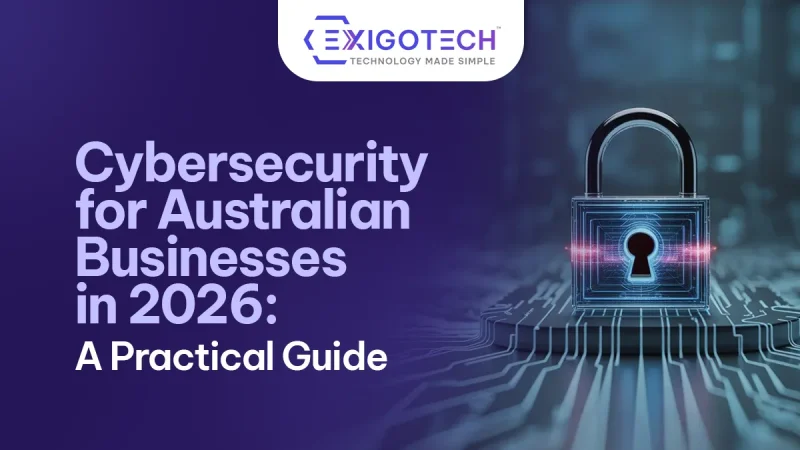
Cybersecurity has become a critical business priority for organisations across Australia.
As businesses continue to adopt cloud platforms, AI, hybrid work, and digital services, cybercriminals are becoming more sophisticated in how they target organisations. The challenge is no longer just preventing attacks; it is preparing for an environment where threats are constantly evolving.
According to the Australian Cyber Security Centre (ACSC), more than 84,000 cybercrime reports were lodged during 2024–25, approximately one every six minutes. The average reported cost of cybercrime rose to AU$80,850, highlighting the growing financial impact of cyber incidents on Australian businesses.
Building strong cybersecurity today requires more than deploying security tools. It requires a strategy that combines prevention, detection, response, and continuous improvement.
At Exigo Tech, we help organisations strengthen their cyber resilience as their Managed Intelligence Partner, delivering practical security solutions aligned with business objectives.
Why Cybersecurity Matters More Than Ever
Today’s cyber threats are faster, more targeted, and increasingly automated.
Artificial intelligence is helping attackers create convincing phishing campaigns, automate malware development, and improve social engineering attacks.
At the same time, businesses are expanding their attack surface through:
- Cloud adoption
- Hybrid work
- Third-party applications
- Connected devices
- AI-powered business tools
Without the right security controls, these technologies can create new opportunities for attackers.
Cybersecurity is no longer simply an IT responsibility; it is an essential part of business risk management.
The Biggest Cybersecurity Threats in 2026
Understanding today’s threat landscape helps organisations make informed security decisions.
AI-Powered Phishing
Phishing remains one of the most successful attack methods.
Modern phishing campaigns use AI to generate convincing emails that closely resemble genuine business communications.
Some attackers are even using deepfake voice technology to impersonate executives and persuade employees to authorise payments or disclose sensitive information.
Regular employee awareness training, advanced email protection, and strong verification procedures remain essential.
Ransomware
Ransomware continues to disrupt businesses of every size.
With the growth of Ransomware-as-a-Service, sophisticated attack tools are now accessible to a much wider range of cybercriminals.
Organisations should focus on:
- Secure backups
- Endpoint protection
- Patch management
- Network segmentation
- Incident response planning
Preparation is critical to reducing operational disruption.
Business Email Compromise
Business Email Compromise (BEC) attacks have become increasingly sophisticated.
Rather than sending obvious phishing emails, attackers often compromise legitimate accounts, monitor conversations, and intervene during financial transactions.
Strong approval processes, email authentication, and user awareness can significantly reduce this risk.
Insider and Third-Party Risks
Not every cyber incident originates outside the organisation.
Insider threats, compromised user accounts, and vulnerabilities introduced by suppliers or third-party applications all contribute to business risk.
Regular access reviews, vendor assessments, and governance processes help strengthen overall security.

Why Cyber Resilience Is Just as Important as Cybersecurity
Preventing every attack is no longer realistic.
Modern organisations must also be prepared to detect, respond to, and recover from incidents.
This broader approach is known as cyber resilience.
A resilient organisation focuses on four key areas:
- Preventing attacks where possible
- Detecting threats quickly
- Responding effectively
- Recovering with minimal business disruption
This mindset helps organisations continue operating even when incidents occur.
Common Cybersecurity Challenges for Small and Medium Businesses
Small and medium-sized businesses often face the same threats as large enterprises but with fewer internal resources.
Common challenges include:
- Weak password management
- Limited use of multi-factor authentication
- Unpatched systems
- Misconfigured Microsoft 365 environments
- Inadequate backup strategies
- Outdated security infrastructure
- Limited employee security awareness
- Shadow IT and unapproved applications
Many of these risks can be addressed through proactive security assessments and managed security services.
Enterprise-grade protection is no longer limited to large organisations.
The Value of Managed Security Services
Maintaining a modern cybersecurity capability requires specialist skills, continuous monitoring, and rapid response.
For many organisations, building these capabilities internally is difficult and expensive.
Managed cybersecurity services provide access to:
- 24×7 security monitoring
- Threat detection and response
- Endpoint protection
- Identity and access management
- Compliance guidance
- Strategic security expertise
Rather than replacing internal IT teams, managed services extend their capabilities and improve organisational resilience.
Why the Essential Eight Still Matters
The Australian Signals Directorate’s Essential Eight remains one of the most practical cybersecurity frameworks available.
Its eight mitigation strategies help reduce exposure to common cyber threats through measures such as:
- Application control
- Patch management
- Restricting administrative privileges
- Multi-factor authentication
- Regular backups
- User application hardening
Implementing the Essential Eight provides organisations with a strong security baseline while supporting regulatory expectations and cyber insurance requirements.
It also forms an important foundation for broader cyber resilience initiatives.
Practical Steps to Strengthen Your Cybersecurity
Improving cybersecurity does not require organisations to solve every challenge at once.
A structured approach often delivers the best results.
Key priorities include:
- Assess your current security posture
- Strengthen identity and access management
- Keep systems and applications updated
- Improve employee security awareness
- Review cloud security configurations
- Test backup and recovery processes
- Develop an incident response plan
- Monitor your environment continuously
Cybersecurity should be treated as an ongoing business process rather than a one-time project.
Why Choose Exigo Tech as Your Managed Intelligence Partner
At Exigo Tech, we help organisations strengthen cybersecurity through practical, business-focused security strategies.
As your Managed Intelligence Partner, we provide:
- Managed Security as a Service (MSaaS)
- Security Operations Centre (SOC)
- Managed Detection and Response (MDR)
- Microsoft security solutions
- Zero Trust cybersecurity assessments
- Essential Eight assessments
- Identity and access management
- Security awareness training
- IT security consulting
Our focus is on helping businesses reduce risk while supporting operational efficiency and long-term growth.
Building a More Secure and Resilient Business
Cyber threats will continue to evolve, and organisations must evolve with them.
Whether the challenge is AI-powered phishing, ransomware, cloud security, insider risk, or third-party exposure, businesses need a strategy that extends beyond traditional prevention.
Strong cybersecurity combines technology, governance, user awareness, and continuous improvement.
By adopting a proactive approach and regularly assessing security posture, Australian organisations can reduce risk, improve resilience, and build greater confidence in their ability to respond to future threats.
Cybersecurity is no longer simply about defending systems.
It is about protecting the future of your business.


 Exigo Tech - Ask AI (Beta)