 Australia
 Singapore
 Philippines
 India
India5.56 MIN READ
Compliance and Cybersecurity Challenges Facing Australia’s Healthcare Industry
 Niten Devalia | Aug 21, 2026
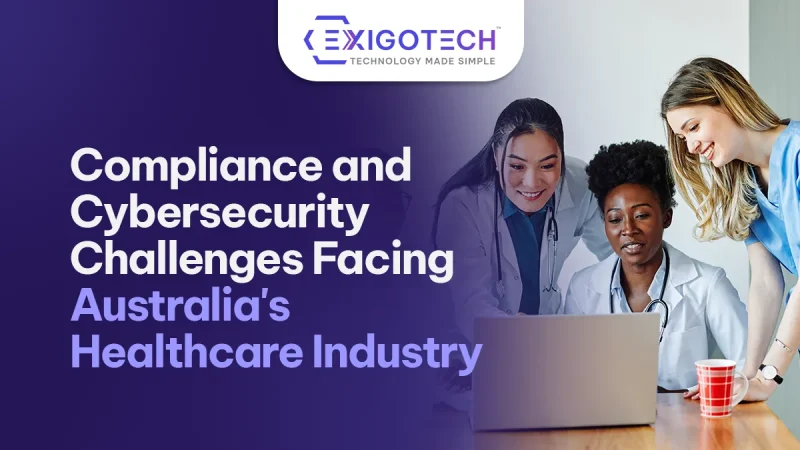
The healthcare industry is undergoing one of the most significant digital transformations in its history. Electronic Medical Records (EMRs), telehealth, cloud-based collaboration, connected medical devices, AI-assisted diagnostics, and digital patient services are improving clinical outcomes and operational efficiency across hospitals, medical practices, aged care providers, and allied health organisations.
However, as healthcare becomes more connected, it also becomes more vulnerable.
Healthcare organisations manage some of the most sensitive information imaginable, including patient records, clinical histories, diagnostic reports, financial information, and personally identifiable data. At the same time, clinicians rely on continuous access to digital systems to deliver timely patient care.
At Exigo Tech, we help healthcare organisations strengthen cybersecurity and compliance as their Managed Intelligence Partner, enabling secure digital transformation while protecting critical healthcare services.
Why Healthcare Is One of the Most Targeted Industries
Healthcare has become a prime target for cybercriminals because of the value of the data it holds and the critical nature of its services.
Unlike many industries, healthcare organisations often cannot afford system downtime. Delays in accessing patient records, diagnostic information, or clinical applications can disrupt patient care and create significant operational challenges.
Common cyber threats include:
- Ransomware attacks
- Phishing campaigns
- Identity-based attacks
- Insider threats
- Medical device vulnerabilities
- Third-party software compromises
As digital healthcare continues to expand, so does the importance of proactive cybersecurity.
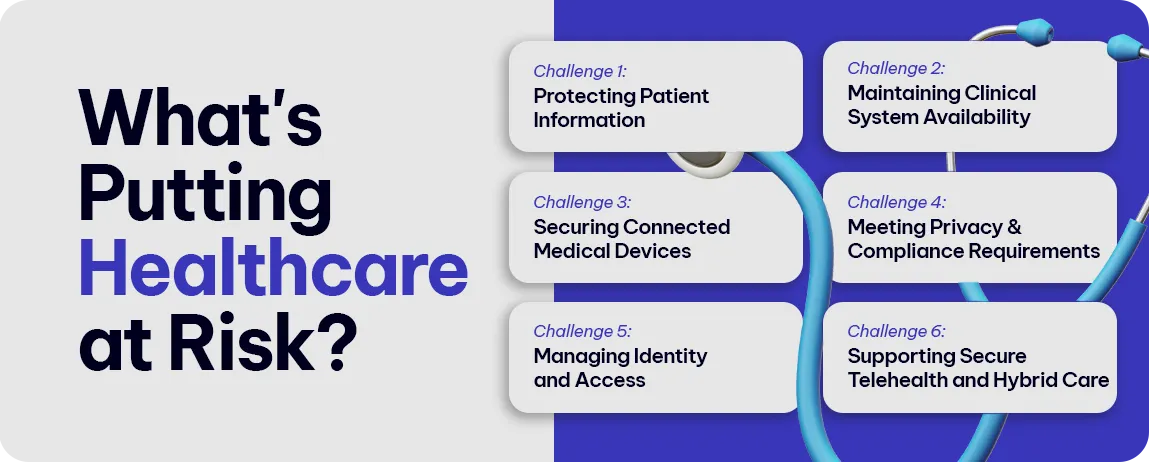
Challenge 1: Protecting Patient Information
Patient information is among the most sensitive data any organisation manages.
Healthcare providers routinely handle:
- Medical histories
- Pathology and imaging reports
- Prescriptions
- Medicare and billing information
- Personal identification details
- Clinical notes
Unauthorised access or disclosure of this information can have serious consequences for patients and organisations alike.
Strong identity management, encryption, access controls, and data governance are essential for protecting patient confidentiality.
Challenge 2: Maintaining Clinical System Availability
Healthcare professionals rely on digital systems every day.
Electronic Medical Records (EMRs), appointment systems, pharmacy applications, pathology platforms, and clinical collaboration tools must remain available when needed.
Cyber incidents that interrupt these systems may result in:
- Delayed patient treatment
- Appointment cancellations
- Slower clinical workflows
- Reduced operational efficiency
- Increased pressure on healthcare staff
Building resilient infrastructure and disaster recovery capabilities helps minimise disruption when incidents occur.
Challenge 3: Securing Connected Medical Devices
Modern healthcare environments use a growing number of connected devices, including:
- Patient monitoring equipment
- Imaging systems
- Diagnostic devices
- Infusion pumps
- Smart medical equipment
Many of these devices were designed primarily for clinical functionality rather than cybersecurity.
Without proper network segmentation, monitoring, and lifecycle management, vulnerable devices may become entry points for cyber attackers.
Protecting connected medical technology is now an essential part of healthcare cybersecurity.

Challenge 4: Meeting Privacy and Compliance Requirements
Australian healthcare organisations operate within a highly regulated environment.
Beyond complying with the Privacy Act, organisations must also manage sensitive health information in accordance with healthcare-specific privacy obligations and contractual requirements.
Healthcare providers are expected to demonstrate strong governance around:
- Patient privacy
- Information security
- Data retention
- Access management
- Incident response
- Audit readiness
As regulatory expectations continue to evolve, maintaining compliance requires continuous governance rather than periodic reviews.
Challenge 5: Managing Identity and Access
Healthcare environments often include a diverse workforce of clinicians, nurses, administrative staff, specialists, contractors, and external service providers.
Each user requires different levels of access to clinical and business systems.
Without effective identity management, organisations may face risks such as:
- Excessive user permissions
- Shared accounts
- Dormant user accounts
- Credential theft
- Unauthorised access to patient information
Implementing Microsoft Entra ID, Multi-Factor Authentication (MFA), and Conditional Access helps ensure only authorised users can access sensitive healthcare systems.
Challenge 6: Supporting Secure Telehealth and Hybrid Care
Telehealth has become an integral part of modern healthcare delivery.
Virtual consultations improve accessibility for patients while providing greater flexibility for healthcare providers.
However, secure telehealth requires organisations to protect:
- Video consultations
- Patient communications
- Shared medical documents
- Remote clinician access
- Cloud-based collaboration platforms
Strong endpoint security, identity protection, and secure Microsoft 365 environments help maintain patient confidentiality during remote care.
Building a Strong Healthcare Cybersecurity Strategy
Rather than relying solely on security software, healthcare organisations should adopt a comprehensive cybersecurity framework.
-
Strengthen Identity Security
Protect healthcare users with Microsoft Entra ID, Multi-Factor Authentication, Conditional Access, and Privileged Identity Management.
-
Protect Sensitive Health Information
Implement data classification, encryption, and governance policies to safeguard patient information throughout its lifecycle.
-
Continuously Monitor Security Threats
Proactive monitoring enables organisations to detect suspicious activity early and respond before incidents escalate.
-
Secure Medical Devices and Infrastructure
Regularly assess connected devices, network architecture, and cloud environments to identify vulnerabilities before they affect clinical operations.
-
Develop Incident Response and Recovery Plans
Healthcare organisations should regularly test recovery procedures to ensure essential clinical services can continue during cybersecurity incidents.
Cybersecurity Directly Supports Better Patient Care
Cybersecurity is often viewed as a technical requirement, but in healthcare it plays a much broader role.
Secure systems enable clinicians to:
- Access accurate patient information
- Deliver uninterrupted care
- Protect patient privacy
- Maintain confidence in digital healthcare services
- Reduce operational disruption
By integrating cybersecurity into everyday healthcare operations, organisations strengthen both clinical outcomes and organisational resilience.
Why Choose Exigo Tech as Your Managed Intelligence Partner
At Exigo Tech, we help healthcare organisations modernise technology environments while maintaining strong cybersecurity, governance, and compliance.
As your Managed Intelligence Partner, we provide:
- Healthcare Cybersecurity Assessments
- Managed Security as a Service (MSaaS)
- Microsoft Entra ID implementation
- Microsoft Defender deployment
- Microsoft 365 security and governance
- Cloud security and compliance advisory
- Identity and access management
- Ongoing managed IT and cybersecurity services
Our approach helps healthcare providers securely adopt modern technologies while protecting patient information and supporting high-quality care.
 Exigo Tech - Ask AI (Beta)