 Singapore
 Australia
 Philippines
 India
India6.20 MIN READ
Compliance and Cybersecurity Challenges Facing Australia’s Logistics and Transportation Industry
 Niten Devalia | Aug 14, 2026
Australia’s logistics and transportation industry connects manufacturers, retailers, suppliers, and consumers across vast distances. As businesses embrace digital transformation, technologies such as Transport Management Systems (TMS), Warehouse Management Systems (WMS), GPS tracking, telematics, cloud platforms, and AI-driven route optimisation are improving efficiency and enhancing customer service.
However, this increased connectivity also brings greater cybersecurity and compliance risks.
From ransomware disrupting deliveries to cyberattacks targeting supply chain partners, logistics organisations face growing pressure to secure their operations while meeting customer, contractual, and regulatory requirements. A single cyber incident can halt warehouse operations, delay shipments, compromise customer data, and damage long-standing business relationships.
At Exigo Tech, we help logistics and transportation businesses strengthen security and improve operational resilience as their Managed Intelligence Partner, enabling organisations to protect their digital supply chains while supporting sustainable growth.
Why Logistics and Transportation Are Increasingly Targeted
Modern logistics businesses rely on connected systems that operate around the clock.
Fleet management platforms, warehouse automation, customer portals, inventory systems, and cloud-based collaboration tools all work together to keep goods moving efficiently.
Cybercriminals understand that even a short disruption can have significant financial consequences. As a result, logistics organisations have become attractive targets for:
- Ransomware attacks
- Supply chain compromises
- Business email compromise
- Data theft
- Credential theft
- Third-party attacks
Unlike many industries, operational downtime in logistics immediately affects deliveries, customer commitments, and revenue.
Challenge 1: Protecting Connected Fleet Technologies
Fleet operations now depend heavily on digital technologies.
Many organisations use:
- GPS tracking
- Vehicle telematics
- Electronic logging systems
- Driver mobile applications
- Fleet management software
While these technologies improve visibility and efficiency, they also create additional entry points for cyberattacks if devices and applications are not properly secured.
Strong identity controls, device management, and secure connectivity are essential for protecting connected fleets.
Challenge 2: Securing Warehouse and Transport Management Systems
Warehouse Management Systems (WMS) and Transport Management Systems (TMS) have become mission-critical platforms.
They manage:
- Inventory
- Shipment scheduling
- Order fulfilment
- Dispatch operations
- Delivery tracking
- Customer communications
If these systems become unavailable due to a cyberattack, warehouse operations can quickly slow or stop altogether.
Implementing robust access controls, regular patching, continuous monitoring, and disaster recovery planning helps minimise operational disruption.
Challenge 3: Managing Supply Chain Cyber Risk
Logistics organisations operate within highly interconnected supply chains.
Carriers, freight forwarders, customs brokers, warehouse operators, suppliers, and customers frequently exchange sensitive business information through integrated digital platforms.
A security incident affecting one partner may create risks across the entire supply chain.
Reducing third-party risk requires organisations to:
- Assess supplier security practices
- Manage external access permissions
- Monitor partner integrations
- Review contractual security obligations
- Regularly evaluate vendor risk
Strong supplier governance helps improve resilience across the entire logistics ecosystem.

Challenge 4: Protecting Customer and Shipment Information
Logistics businesses process large volumes of commercially sensitive information.
This may include:
- Customer details
- Delivery schedules
- Shipment tracking information
- Freight documentation
- Pricing information
- Warehouse inventory
- Supplier contracts
Protecting this information is essential not only for regulatory compliance but also for maintaining customer trust and competitive advantage.
Strong data governance and encryption reduce the risk of unauthorised access.
Challenge 5: Meeting Compliance and Customer Requirements
Compliance expectations continue to evolve.
In addition to meeting obligations under Australia’s Privacy Act, logistics organisations are increasingly required to demonstrate cybersecurity maturity as part of commercial agreements with customers.
Many enterprise customers now expect suppliers to show evidence of:
- Security policies
- Identity management
- Data protection
- Incident response planning
- Risk management
- Business continuity capabilities
Demonstrating strong cybersecurity has become an important competitive differentiator when bidding for contracts.
Challenge 6: Preventing Business Disruption
In logistics, time is critical.
Cyber incidents can disrupt:
- Dispatch operations
- Warehouse productivity
- Fleet scheduling
- Customer communications
- Inventory visibility
- Order fulfilment
The financial impact often extends beyond system recovery to include delayed deliveries, contractual penalties, lost revenue, and reputational damage.
Business continuity planning helps organisations prepare for and recover from unexpected disruptions more effectively.
Building a Strong Cybersecurity and Compliance Strategy
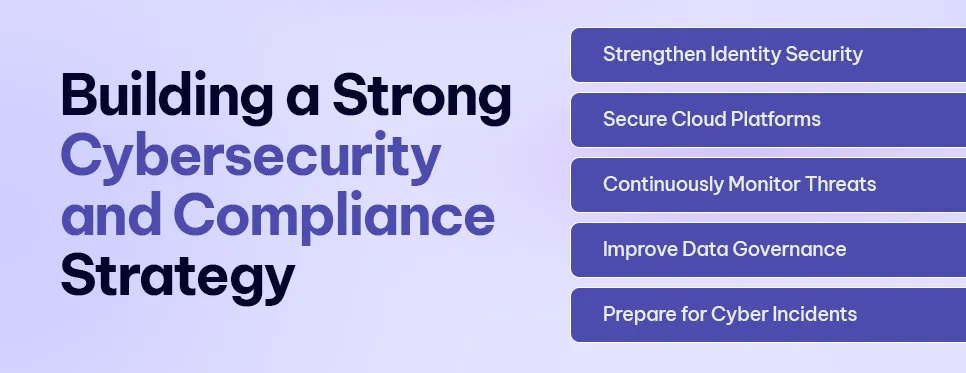
Rather than addressing risks individually, logistics organisations should adopt a proactive, layered approach to cybersecurity.
-
Strengthen Identity Security
Implement Microsoft Entra ID, Multi-Factor Authentication (MFA), and Conditional Access to protect user accounts and reduce the risk of credential-based attacks.
-
Secure Cloud Platforms
As more logistics systems move to Microsoft Azure and Microsoft 365, organisations should regularly review cloud configurations, user permissions, and security policies.
-
Continuously Monitor Threats
Ongoing monitoring helps identify suspicious activity early, reducing the likelihood of extended operational disruption.
-
Improve Data Governance
Establish clear policies for handling customer, shipment, and operational data while ensuring only authorised users can access sensitive information.
-
Prepare for Cyber Incidents
Develop and regularly test incident response and disaster recovery plans to minimise downtime and maintain service continuity during cyber events.
Cybersecurity Supports Supply Chain Resilience
Cybersecurity is no longer just an IT responsibility; it plays a direct role in supply chain performance.
Organisations with mature cybersecurity practices are better positioned to:
- Maintain reliable deliveries
- Protect customer relationships
- Reduce operational disruptions
- Meet contractual obligations
- Strengthen business resilience
By integrating cybersecurity into day-to-day operations, logistics businesses can improve both operational efficiency and long-term competitiveness.
Why Choose Exigo Tech as Your Managed Intelligence Partner
At Exigo Tech, we help logistics and transportation organisations modernise their technology environments while strengthening cybersecurity and compliance.
As your Managed Intelligence Partner, we provide:
- Logistics Cybersecurity Assessments
- Managed Security as a Service (MSaaS)
- Microsoft Entra ID and identity security
- Cloud security and governance
- Microsoft Defender implementation
- Security monitoring and incident response
- Compliance and risk advisory
- Ongoing managed IT and cloud services
Our integrated approach helps logistics businesses reduce cyber risk, improve operational resilience, and build secure digital supply chains.
Secure Logistics Begins with Proactive Cybersecurity
The logistics and transportation industry depends on speed, reliability, and trust. As digital technologies continue to reshape supply chain operations, cybersecurity and compliance have become essential business priorities rather than technical considerations.
By securing fleet technologies, protecting warehouse and transport systems, strengthening supplier governance, and continuously monitoring cyber risks, organisations can reduce operational disruptions while improving customer confidence.
Businesses that invest in proactive cybersecurity today will be better equipped to support resilient supply chains, meet evolving compliance expectations, and deliver reliable services in an increasingly connected world.

 Exigo Tech - Ask AI (Beta)