 Philippines
 Australia
 Singapore
 India
India5.26 MIN READ
IT Security for Not-for-Profit Organisations: Protecting Mission, Data, and Community Trust
 Niten Devalia | May 22, 2026
Not-for-profit organisations operate with a unique responsibility.
They manage sensitive donor information, community data, financial records, volunteer systems, and essential operational platforms, often while working with limited internal resources and tight budgets.
At the same time, cyber threats targeting not for profits are increasing.
Many attackers view not for profit organisations as easier targets due to:
- Limited cybersecurity investment
- Smaller IT teams
- Legacy systems
- Heavy reliance on cloud and collaboration platforms
- Large volumes of sensitive data
A security incident can disrupt operations, damage donor trust, and impact the communities these organisations support.
This is why IT security for not-for-profits is no longer optional; it is essential for operational continuity and organisational credibility.
At Exigo Tech, we act as your Managed Intelligence Partner, delivering managed IT security services, strategic IT security consulting, and support from experienced IT security consultants and IT security specialists, customised to the needs of not-for-profit organisations.
Why Not-for-Profits Are Increasingly Targeted
Not-for-profit organisations often hold highly valuable information, including:
- Donor and supporter data
- Payment and financial information
- Community and beneficiary records
- Employee and volunteer details
- Grant and funding documentation
At the same time, many organisations operate with:
- Smaller internal IT teams
- Distributed staff and volunteers
- Multiple cloud platforms
- High collaboration requirements
Cybercriminals understand that these environments may have fewer dedicated security resources, making them attractive targets for phishing, ransomware, and data theft.
The Growing Technology Dependence of Not-for-Profits
Modern not-for-profits rely heavily on digital platforms to operate effectively.
This may include:
- Microsoft 365 collaboration environments
- CRM and donor management platforms
- Online donation systems
- Volunteer management systems
- Remote and hybrid work environments
- Cloud-based file sharing and communication tools
These platforms improve efficiency and outreach, but they also expand the attack surface.
Without proper security controls, organisations may face:
- Data breaches
- Account compromise
- Ransomware incidents
- Fraud and phishing attacks
- Operational disruption
What Managed IT Security Services Deliver
Managed IT security services provide ongoing protection and monitoring across the organisation’s environment.
This includes:
- 24/7 threat monitoring and detection
- Endpoint and device protection
- Identity and access management
- Email and phishing security
- Vulnerability management and patching
- Backup and ransomware protection
- Security incident response and recovery support
Rather than reacting after an incident occurs, managed services create a proactive security model.
The Role of IT Security Consulting for Not-for-Profits
Security strategies for not-for-profits must balance:
- Protection
- Budget constraints
- Ease of use
- Operational flexibility
This is where IT security consulting becomes valuable.
An experienced IT security consultant helps organisations:
- Assess their current security posture
- Identify key risks and vulnerabilities
- Prioritise improvements based on operational impact
- Align security controls with organisational goals
- Improve policies, governance, and access controls
Consulting ensures security investments deliver meaningful value without unnecessary complexity.
Why You Need an IT Security Specialist
Not for profit organisations often operate differently from traditional commercial businesses.
An experienced IT security specialist understands:
- Volunteer and remote workforce challenges
- Shared access and collaboration risks
- Budget-conscious security planning
- Cloud-first operational environments
- Data protection obligations
This expertise helps ensure security controls remain practical and sustainable.
Common Security Challenges for Not-for-Profits
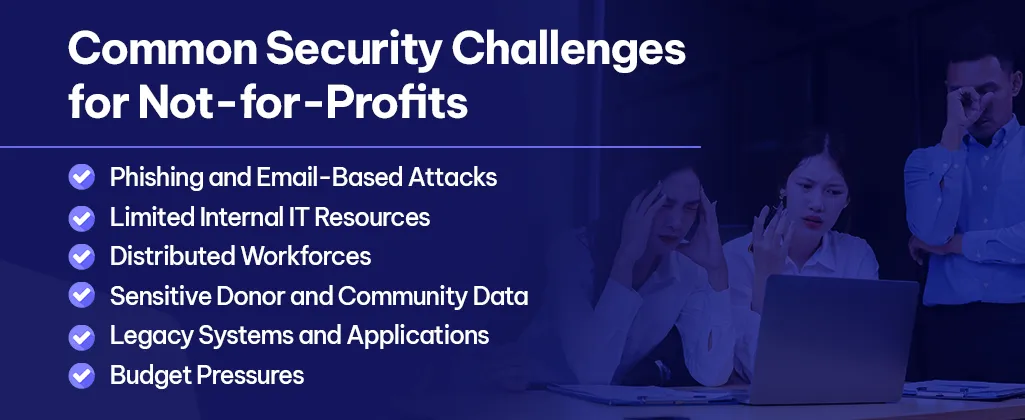
Not for profit organisations frequently face:
-
Phishing and Email-Based Attacks
Staff and volunteers are common targets for credential theft.
-
Limited Internal IT Resources
Smaller teams may struggle to manage evolving threats.
-
Distributed Workforces
Remote staff and volunteers increase access complexity.
-
Sensitive Donor and Community Data
Information must remain protected and confidential.
-
Legacy Systems and Applications
Older platforms may lack modern security protections.
-
Budget Pressures
Security investments must be efficient and strategically prioritised.
Managed IT security services help address these challenges through structured protection and ongoing oversight.
Benefits of a Managed Security Approach
A proactive security strategy provides significant operational benefits.
-
Reduced Likelihood of Cyber Incidents
Continuous monitoring lowers exposure to threats.
-
Reduced Operational Disruption
Fast detection and response minimise downtime.
-
Improved Recovery Capability
Backup and recovery processes strengthen resilience.
-
Stronger Governance and Visibility
Leadership gains clearer insight into organisational risk.
-
Better Protection of Donor and Community Trust
Strong security helps maintain credibility and confidence.
-
Lower Long-Term Security Costs
Preventing incidents reduces financial and reputational impact.
-
Greater Executive Confidence
Boards and leadership know security risks are actively managed.
-
Stronger Security Culture and Accountability
Clear policies and awareness improve organisational practices.
Supporting Secure Collaboration and Remote Work
Many not for profits rely heavily on:
- Remote teams
- Volunteers
- Shared collaboration environments
- Cloud platforms
Security must support these operational realities without creating barriers to productivity.
Managed IT security services help ensure:
- Secure remote access
- Controlled permissions and identity management
- Safe collaboration across teams and partners
- Protection of shared files and communications
This allows organisations to remain flexible while staying secure.
From Reactive Security to Proactive Protection
Many not-for-profits still operate reactively:
- Addressing issues after they occur
- Limited visibility into threats
- Inconsistent security controls
Modern security requires:
- Continuous monitoring
- Real-time threat detection
- Proactive risk management
- Ongoing optimisation and governance
This shift improves resilience and operational stability.
Why Choose Exigo Tech as Your Managed Intelligence Partner
At Exigo Tech, we understand that not-for-profit organisations need practical, scalable, and effective security solutions.
As your Managed Intelligence Partner, we:
- Deliver comprehensive managed IT security services
- Provide strategic IT security consulting
- Act as your trusted IT security consultant
- Deploy experienced IT security specialists
- Align security with operational and budget realities
- Continuously improve your security posture
We help not-for-profits protect their people, systems, and mission.
Security Protects More Than Systems; It Protects Your Mission
For not-for-profit organisations, cybersecurity is more than technology.
It is about protecting:
- Community trust
- Donor confidence
- Operational continuity
- Organisational reputation
With the right security approach, not-for-profits can focus on delivering impact — knowing their systems and data are protected.

 Exigo Tech - Ask AI (Beta)